

ECOWAS Court Awards ₦21 Million Against Ghana, Restrains Arbitrary Passport Revocation and Expulsion of African Citizens
The ECOWAS Community Court of Justice has awarded a total sum of ₦21 million in damages against the Republic of Ghana in favour of Mary Omerere, a Ghanaian citizen whose passport was allegedly revoked, resulting in restrictions on her movement and denial of entry into Ghana.
The judgment was delivered on June 23, 2026, in the case of Mary Omerere v. Republic of Ghana (Suit No. ECW/CCJ/APP/25/25), an application filed before the ECOWAS Court in May 2025.
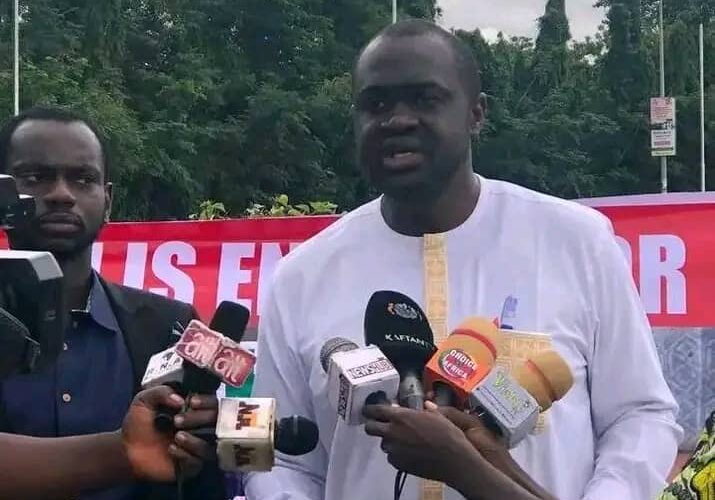
Lead counsel to the applicant, Samuel Ihensekhien, who appeared on behalf of the League of Public Interest Lawyers alongside Dr. S. M. Oyeghe Esq. and Mike Ezeobi Esq., briefed journalists on the outcome of the case.
According to the legal team, the matter centred on Omerere’s claim to Ghanaian citizenship by birth and the alleged administrative actions by Ghanaian authorities which resulted in the revocation of her passport and the denial of her right to travel freely into Ghana.
The applicant, Mary Omerere, formerly known by a different name before her marriage, claimed that she was born a Ghanaian citizen. Following her marriage to Nigerian citizen Henry Obukohwo Omorere under Nigerian law, she changed her name and subsequently sought to renew her Ghanaian passport through the Ghana High Commission in Lagos.
However, she allegedly faced prolonged delays and was ultimately denied renewal of her passport. According to her claims before the court, officials of the Ghana High Commission as well as immigration and passport authorities questioned the authenticity of her birth records and advised her to obtain a Nigerian passport instead.
Her legal team argued that these actions effectively deprived her of her Ghanaian nationality and rendered her unable to travel to Ghana, including preventing her from attending her grandmother’s funeral. The applicant further maintained that the situation left her without valid travel documentation, causing severe personal, family and financial hardship, as well as affecting her residency status in the United Kingdom.
The applicant also informed the court that several attempts by her lawyers to engage Ghanaian authorities, including requests for DNA testing and further verification, yielded no positive outcome.
She consequently alleged violations of her rights to nationality and freedom of movement as guaranteed under the Constitution of Ghana, the African Charter on Human and Peoples’ Rights and other international human rights instruments.
Among the reliefs sought were declarations affirming her Ghanaian citizenship, findings that her fundamental rights had been violated, an order directing the immediate issuance or renewal of her Ghanaian passport, and damages for the losses suffered.
In its judgment, the ECOWAS Court held that Ghana violated Omerere’s right to freedom of movement and effectively rendered her stateless.
The court ruled that Ghana breached her fundamental right to leave and return to her country as guaranteed under Article 12(2) of the African Charter on Human and Peoples’ Rights and Article 21(2) of the Constitution of Ghana.
The court further held that her right to nationality and the right not to be arbitrarily deprived of that nationality had been violated.
The ECOWAS Court also declared that African citizens cannot be expelled from a member state except in accordance with the law and due judicial process. It consequently restrained Ghana from actions that would violate international guarantees relating to freedom of movement.
Additionally, the court directed Ghana, within six months, to communicate its decision regarding the applicant’s passport status and documentation.
The court awarded damages in the sum of ₦21 million, equivalent to approximately $15,000, against the Republic of Ghana. It also ordered that litigation costs, to be assessed by the ECOWAS Court Registry, be paid by Ghana.
The judgment is being viewed as a significant affirmation of the rights of ECOWAS citizens to nationality, due process and freedom of movement within the West African sub-region.